Plastics are everywhere—from the shrink wrap protecting boats and construction sites to packaging materials and industrial coverings. But do you know what happens to plastic after you dispose of it?
Understanding how plastics break down (or don’t) can help you make smarter choices for your business and the environment. Let’s break it down.
Conventional Plastics: Durable But Dangerous
Most shrink wraps today are made of polyethylene (PE) or polypropylene (PP)—plastics designed for durability, not sustainability. While these materials do their job well, they come with a huge environmental cost:
✅ Strong & durable – Ideal for industrial applications.
❌Breaks down into microplastics
❌Takes hundreds of years to degrade.
❌Limited recyclability – Many recycling facilities reject contaminated plastics.
❌Harmful disposal options – Landfilling and incineration lead to pollution.
Where Does It Go?
- Landfills: Stays intact for centuries, breaking into microplastics.
- Oceans & Waterways: Becomes marine debris, harming wildlife.
- Incineration: Releases toxic gases and greenhouse emissions.
If your business relies on conventional plastics, it’s time to rethink the materials you use.
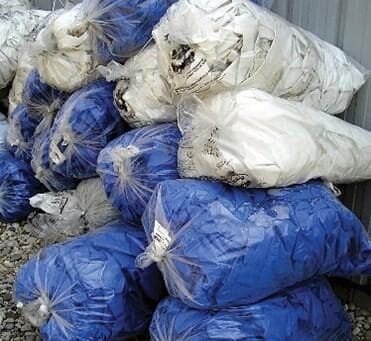
Discarded shrink wrap after boat winterization
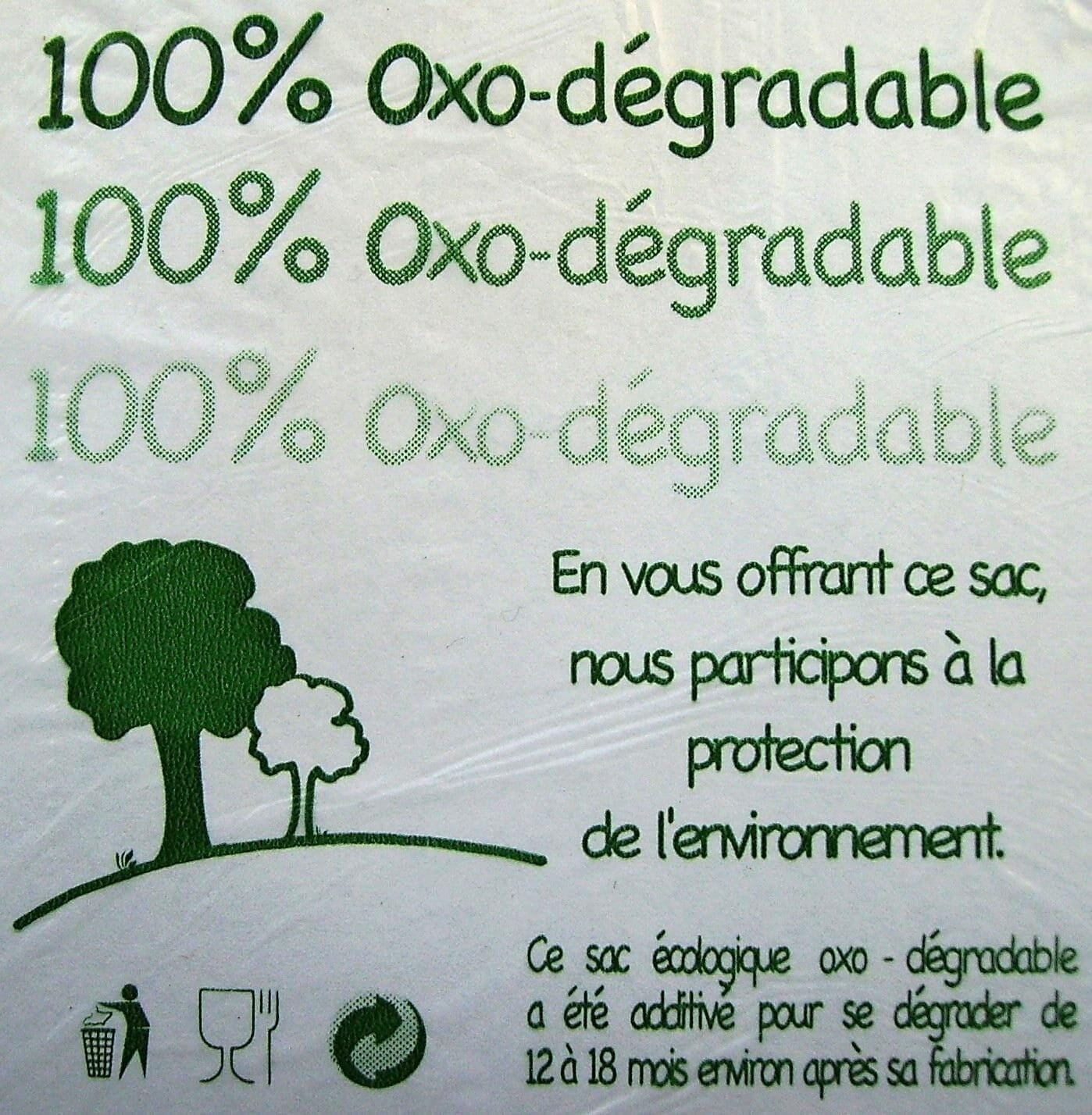
Oxo-Degradable Plastics: A False Solution
You might have heard about oxo-degradable plastics—plastics that claim to "break down faster." But here’s the truth:
✅ Fragments faster than regular plastic.
❌Turns into microplastics instead of fully decomposing.
❌Release heavy metals during degradation.
❌Cannot be recycled safely.
These plastics still persist in the environment, causing long-term pollution.
Compostable Plastics: Not Always the Answer
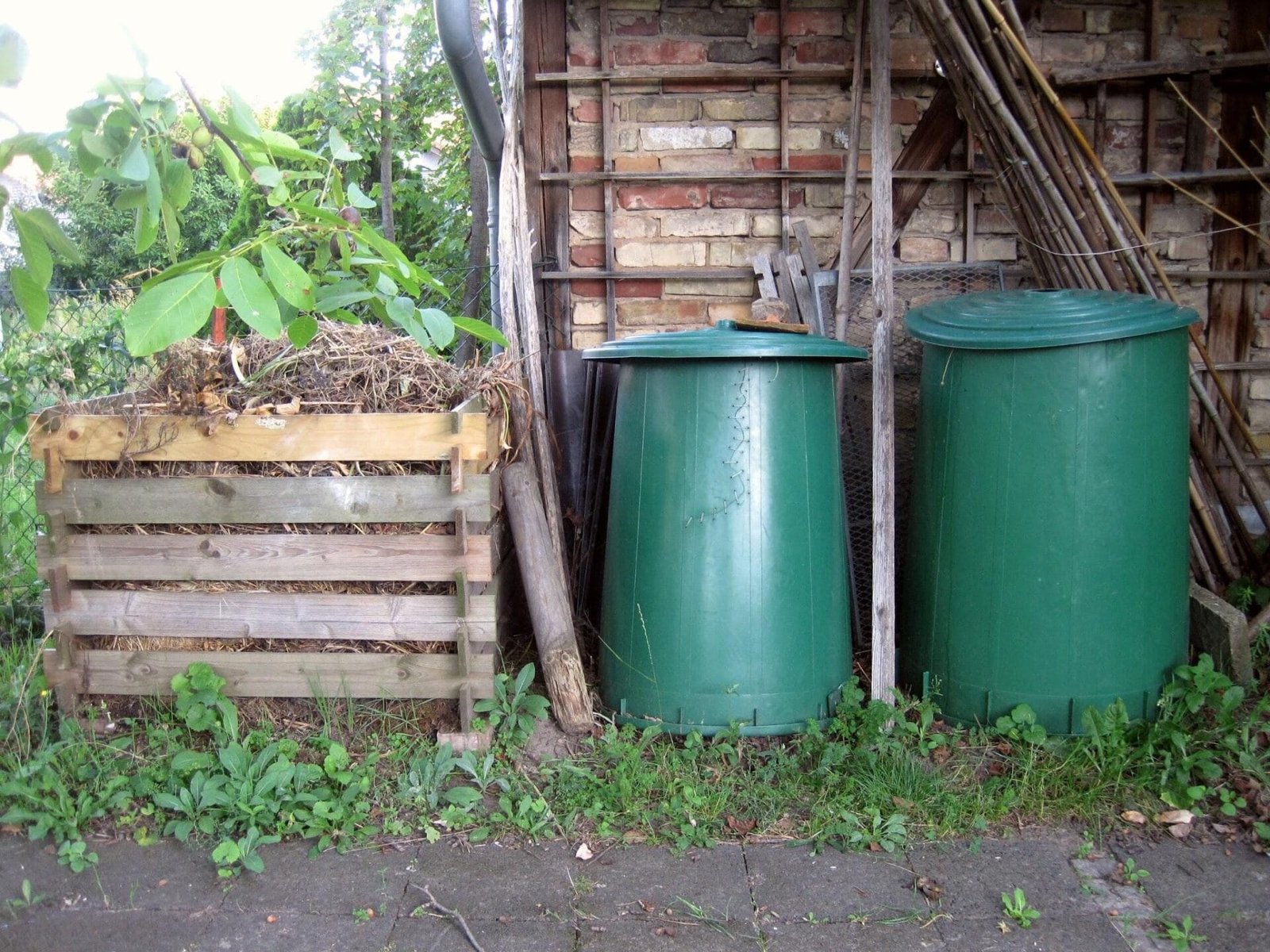
Compostable plastics sound like a great solution, but they come with hidden drawbacks:
✅ Break down in industrial composting facilities.
❌Do NOT decompose in landfills, oceans, or natural environments.
❌May leave behind toxic residues and heavy metals.
❌Home composting is unreliable.
❌Not suitable for shrink wrapping applications.
If your business doesn’t have access to industrial composting, these materials may not be the best fit.
Biodegradable Plastics: The Hidden Challenges
Biodegradable plastics are designed to break down with the help of microorganisms, but not all of them degrade efficiently in real-world environments. Many require specific conditions, such as anaerobic (oxygen-free) environments found in landfills, where microbes assist in the breakdown process. However, this can lead to unintended consequences.
Disposal Realities:
- Landfills: Some biodegradable plastics decompose in anaerobic conditions, but this process often produces methane, a potent greenhouse gas. While some landfills capture methane for energy, many do not, allowing emissions to contribute to climate change.
- Composting: Only specific biodegradable plastics are suitable for industrial composting, where controlled conditions ensure degradation. However, if improperly managed, they can leave behind microplastics or heavy metals that contaminate the compost.
While biodegradable plastics sound like a perfect solution, their real impact depends on proper disposal methods—and most waste streams today are not equipped to handle them correctly.
This is why bioaqualife® is different.

Why bioaqualife® is the Future of Shrink Wrap
bioaqualife®'s biodegradable shrink wrap is engineered to solve the plastic problem—without sacrificing performance:
✅ Breaks down in 3-5 years (vs. centuries for conventional plastics).
✅ Biodegrades into water, CO₂, and organic matter—NO microplastics.
✅ Safe for the recycling stream—a circular solution.
✅ Works just like traditional shrink wrap or even outperforms it —strong, durable, and effective.
Whether you run a shrink wrap installation business, marina, construction site, or logistics or packaging company, switching to bioaqualife® means protecting what matters—your assets and the planet.
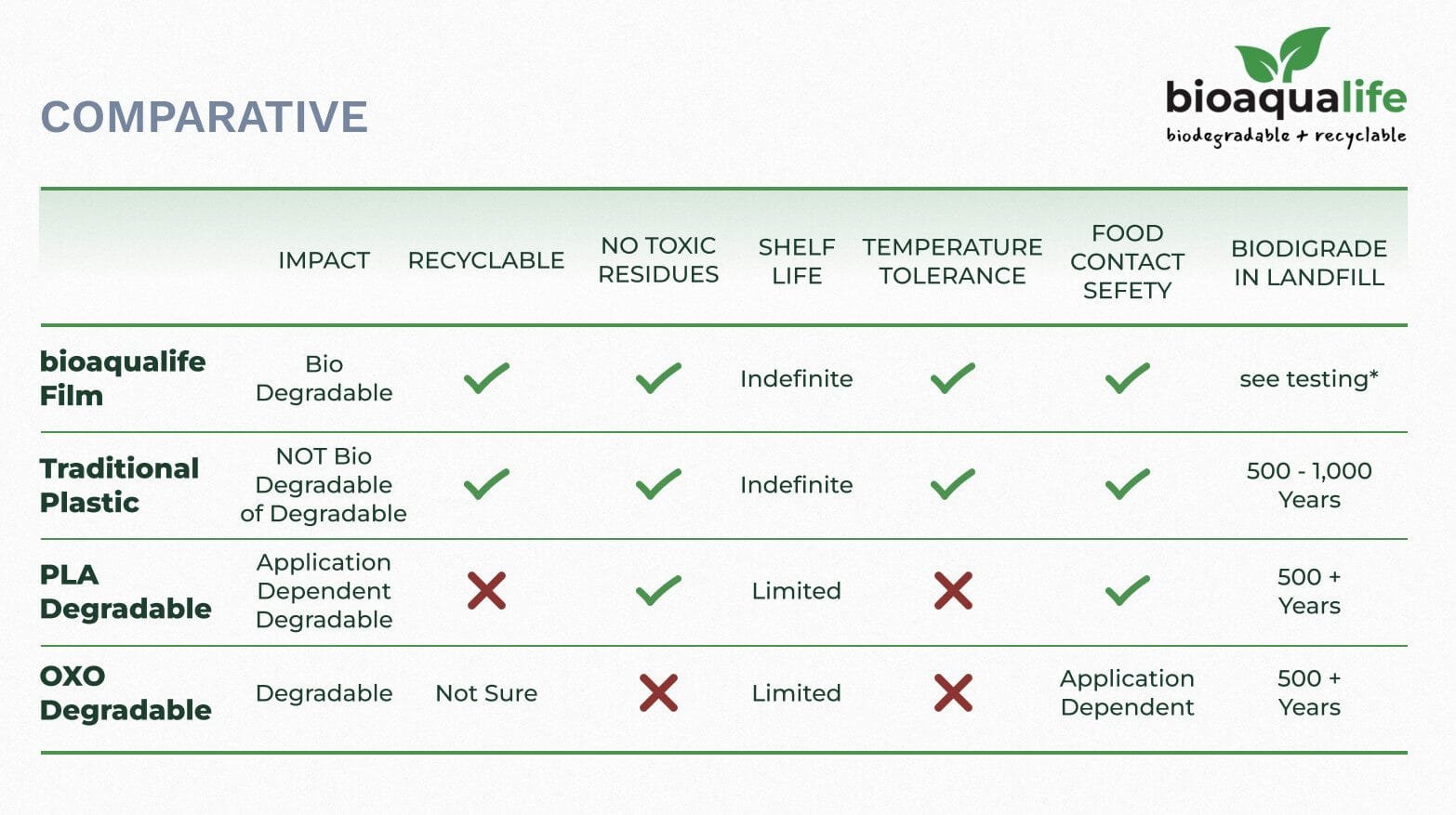
Plastics Comparison At Glance
The Choice is Clear
Keep using conventional plastics and contribute to long-term pollution.
Switch to bioaqualife® and be part of the solution.
Say YES to Green! Choose bioaqualife®!