
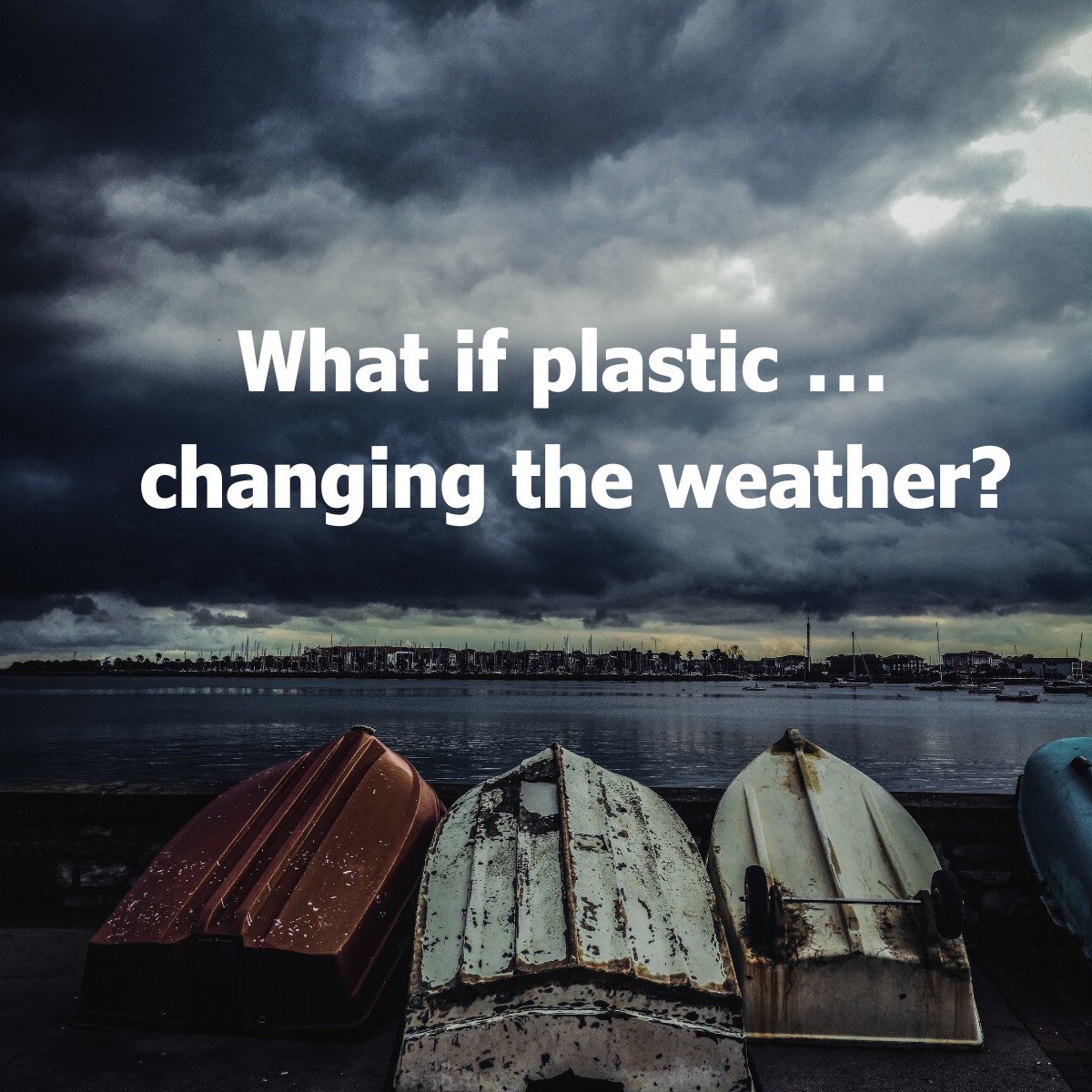
For decades, plastic pollution has been viewed as a surface problem — something we can see accumulating in oceans, rivers, and landscapes. But new research suggests the story doesn’t stop there.
A recent study led by Hosein Foroutan at Virginia Tech, published in Environmental Science & Technology, reveals that airborne microplastics can play an active role in cloud formation.
From Pollution to Participation
The study shows that microplastics, once suspended in the atmosphere, can become colonized by bacteria such as Pseudomonas syringae. These biological interactions significantly enhance the particles’ ability to act as ice-nucleating agents — the seeds around which ice crystals form in clouds.
Why does this matter?
Because ice formation is a key process behind:
- Cloud development
- Precipitation (rain and snow)
- Weather patterns
In simple terms, plastic particles in the air may be helping shape the weather.
A System We Don’t Fully Understand
This discovery challenges a long-standing assumption: that plastic is merely waste to be managed.
Instead, it positions plastic as something far more complex — a material that can integrate into natural systems at a planetary scale.
What happens when synthetic materials:
- Interact with living organisms in the atmosphere?
- Influence cloud microphysics?
- Potentially alter climate processes?
The honest answer is: we don’t fully know yet.
Rethinking the Materials We Use
At bioaqualife®, we see this as a turning point in how we think about materials.
The question is no longer just about reducing visible pollution. It’s about understanding the invisible pathways through which materials travel — and the unintended consequences they may carry with them.
Because once materials enter Earth’s interconnected systems, their impact is no longer isolated.
It becomes systemic.
Looking Ahead
This research is an early signal — not a final answer.
But it invites a critical reflection:
What kind of materials are we putting into circulation today? And what role might they play in shaping the systems of tomorrow?
At bioaqualife®, we believe innovation must begin with this awareness.
Because the future of sustainability isn’t just about managing waste.
It’s about designing materials that belong in the systems they inevitably enter.
Take 2 minutes to read the full article and decide for yourself:
Read the full study