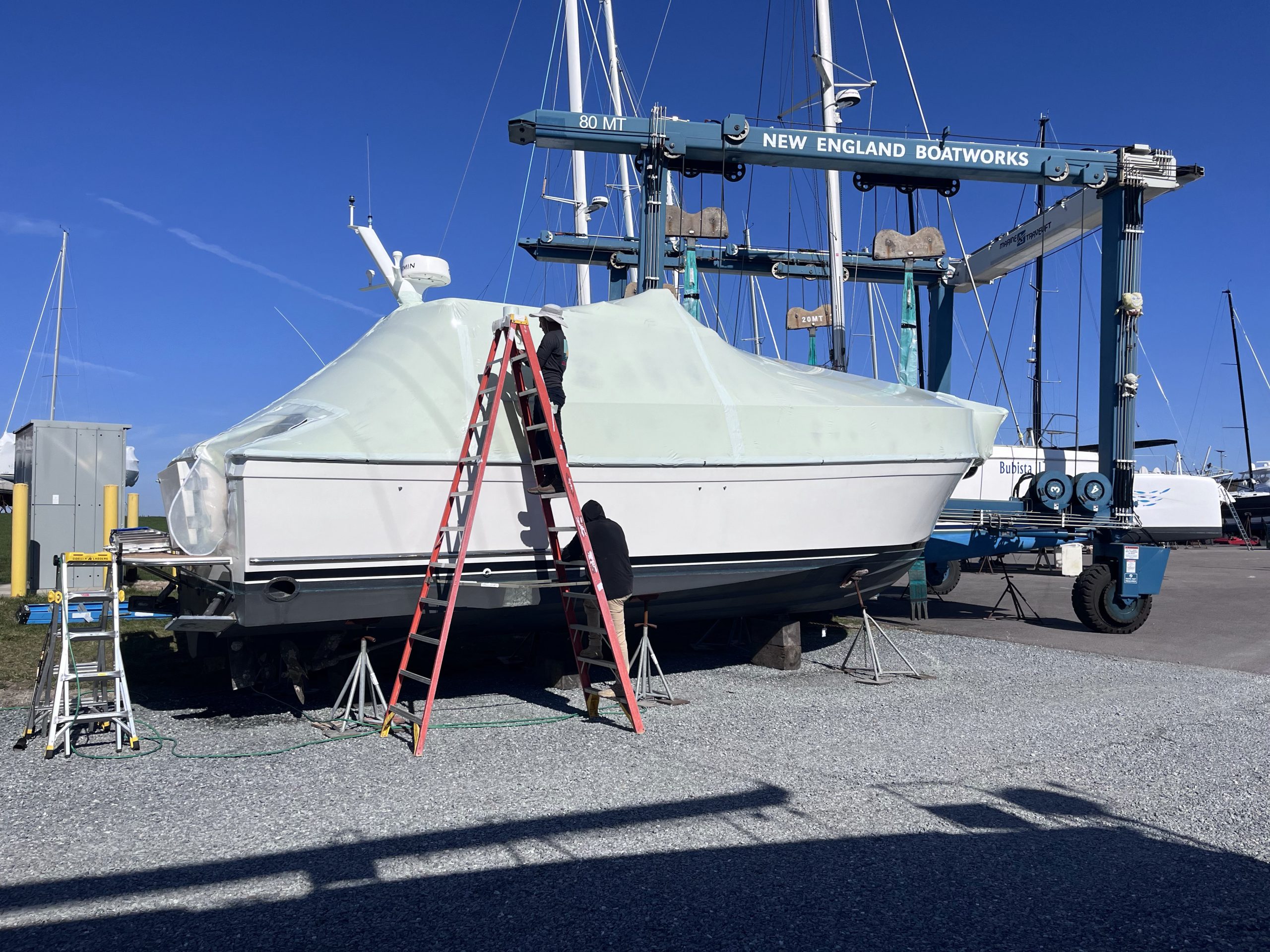
Last updated: November 13, 2026
Quick answer: Yes, shrink wrapping a boat yourself is possible with the right tools and some patience. DIY materials typically cost $350 to $1,000 per boat, while a pro charges $15 to $30 per linear foot, labor included. The trade-off is time, a learning curve and the risk of a frame or seal mistake a pro would avoid.
What It Actually Takes to DIY
Shrink wrapping a boat is not complicated in concept. You build a frame over the deck, stretch film over it, seal the seams and shrink everything tight with heat. Vents, where the boat needs them, go in last.
A first attempt usually takes longer than expected, often a full weekend for a mid-size boat, and the quality gap between a careful first try and a rushed one shows up fast. Loose seams, missed vents and uneven heating are the most common first-timer problems, and each one can mean redoing a section.
DIY Costs: What You're Actually Buying
Material costs for a DIY shrink wrap job typically run $350 to $1,000 per boat, depending on size. That range covers the core supplies, not the tool you shrink the film with if you don't already own one.
| Item | Why You Need It |
|---|---|
| Shrink wrap film | The outer shell; sized and gauged to your boat |
| Shrink wrap tape | Seals seams and secures film to the frame |
| Heat gun or propane torch | Shrinks the film tight; a propane torch with the right tip is standard for larger jobs |
| Frame material (strapping, poles) | Builds the support structure the film shrinks around |
| Ventilation kit | Prevents moisture buildup and mildew underneath the wrap |
| Zipper door kit | Lets you access the boat without cutting the wrap |
A heat tool is the one item that can turn a budget DIY job into an expensive one if you don't already own a suitable propane torch or heat gun. Renting or buying one adds to the total, and a tool with insufficient output makes the whole process slower and less consistent.
Professional Costs for Comparison
A professional wrap typically runs $15 to $30 per linear foot, which lands most mid-size boats between $375 and $1,200 depending on length, height and frame complexity. The full breakdown by boat size is covered in how much it costs to shrink wrap a boat.
The price difference between DIY and professional work is real, but it is not the whole story. A shop also brings experience with frame geometry, consistent heat application and, often, a faster turnaround measured in hours rather than a full weekend.
Common DIY Mistakes
Most DIY problems trace back to a handful of repeatable mistakes, not bad luck.
| Mistake | What Goes Wrong |
|---|---|
| Skipping or undersizing vents | Moisture builds up inside the wrap, leading to mildew and condensation damage |
| Uneven heat application | Film shrinks loosely in some areas, leaving slack that flaps and wears through over winter |
| Weak frame support | Snow or wind load can collapse or tear the wrap mid-season |
| Poor seam sealing | Water finds its way in through gaps in the tape |
| Wrapping over sharp points without padding | Antennas, outriggers and rail corners can puncture the film from the inside |
Skills and Tools You Need Before Starting
DIY shrink wrapping is reasonable for an owner who is comfortable working at height, handling a heat tool safely, and taking the time to build a proper frame rather than rushing to get the film on. It is less reasonable for a first-timer with a complex boat, a tight timeline, or no one to help manage the film while it's being shrunk.
Before starting, you should have:
- A heat gun or propane torch rated for shrink film work, with practice on a scrap piece first
- Enough frame material to properly support the boat's shape, not just drape film over existing rails
- A plan for ventilation placement before the film goes on, not after
- A second person to help manage large film sections, especially on anything over 25 feet
When DIY Makes Sense (and When It Doesn't)
DIY tends to make the most sense for smaller boats with simple profiles, owners with some hands-on experience, and situations where the time investment is not a constraint. It makes less sense for larger boats with towers or complex frames, a tight storage deadline, or a first-time attempt on a boat that cannot afford a mistake.
Practical takeaway: if this is your first shrink wrap job, practice heat-shrinking technique on a scrap piece of film before you touch the boat, since heat control is the single skill that separates a clean DIY job from a loose, flapping one.
Whichever route you take, the film itself matters as much as the technique. bioWRAP® is UV-stable for extended outdoor exposure and welds cleanly with standard heat-sealing equipment, which makes it a practical choice for both DIY and professional installs. Owners putting together a first DIY kit can start with the bioKIT® starter kit, which bundles the core tools needed for a first wrap job, and once the season ends, it's worth knowing what actually happens to the film after removal before assuming disposal is simple.
Frequently Asked Questions
Is it hard to shrink wrap a boat yourself?
What tools do I need to shrink wrap a boat myself?
Is DIY shrink wrapping cheaper than hiring a pro?