What's the point of a biodegradable zipper door? Don't the zippers themselves just end up in the trash?
bioWRAP® Reaches 93% Biodegradation in just over 3 years
At bioaqualife®, we're proud to share another significant milestone in the development of our landfill-biodegradable shrinkwrap technology.
Our latest ASTM D5511 laboratory testing confirms that bioWRAP® has reached 93% biodegradation in landfill conditions after just 1,147 days - just over three years. These ongoing independent test results provide further evidence that high-performance landfill-biodegradable shrink wrap can deliver the durability professionals demand while offering a significantly more responsible end-of-life than conventional shrink wrap.
For decades, traditional plastic shrink wrap has been designed to last, often remaining in landfills for generations. At bioaqualife®, we believe there is a better way. Our mission is to provide professional-grade shrink wrap for the marine, construction, transportation, industrial, and agricultural sectors that protects valuable assets throughout its service life without creating unnecessary long-term landfill waste.
The latest ASTM D5511 results represent another important step in validating the technology behind bioWRAP® and our commitment to continuous innovation. While maintaining the strength, durability, and performance expected by professional installers, dealers, and distributors, bioWRAP® is engineered to biodegrade in biologically active landfill environments helping reduce the long-term environmental footprint of plastic waste.
This milestone reinforces bioaqualife®'s vision of redefining plastic protection by combining premium performance with smarter end-of-life design. It's proof that businesses no longer have to choose between reliable protection and environmental responsibility.
As testing continues, bioaqualife® will keep sharing verified results, product innovations, and real-world performance data with our customers and partners. We remain committed to advancing the next generation of landfill-biodegradable shrinkwrap and helping businesses transition to more sustainable solutions without compromising on quality.
Stay connected with bioaqualife® for the latest updates on ASTM D5511 testing, biodegradation milestones, product innovation, and high-performance shrink wrap solutions for the marine, construction, industrial, transportation, and agricultural industries.
Banner #0

Advanced Biodegradable
SHRINKWRAP PROTECTIVE SYSTEM
bioaqualife® Achieves Better Business Bureau Accreditation
bioaqualife®, the manufacturer of the Advanced Biodegradable Protective Shrinkwrap system, is proud to announce that it has officially earned Better Business Bureau (BBB) Accreditation.
BBB Accreditation is awarded to businesses that demonstrate a strong commitment to ethical business practices, transparency, integrity, and exceptional customer service. For bioaqualife®, this recognition reflects the values that have guided our company from the very beginning.
As a manufacturer of landfill-biodegradable shrink wrap for the marine, construction, transportation, industrial, and agricultural industries, bioaqualife® is committed to delivering products that combine professional-grade performance with a more environmentally responsible end-of-life solution. Our flagship products, including bioWRAP®, bioTAPE®, and bioDOOR™ are designed to help businesses protect valuable assets while reducing the long-term environmental impact associated with conventional plastic shrink wrap.
As our network of distributors, dealers, and professional shrink wrap installers continues to grow across North America and beyond, trust remains one of our most important commitments. BBB Accreditation reinforces our dedication to building long-lasting relationships through honesty, accountability, responsive customer support, and delivering on the promises we make to every customer and partner.
For businesses looking for a reliable supplier of marine shrink wrap, construction shrink wrap, industrial shrink wrap, and landfill-biodegradable shrink wrap, this accreditation provides additional confidence that bioaqualife® operates according to the highest standards of business ethics and customer care.
"BBB Accreditation reflects our commitment to doing business the right way while continuing to advance sustainable plastic protection system," - said Nataliya Zagorodnova, CMO of bioaqualife®.
We sincerely thank our distributors, dealers, professional installers, customers, and business partners for their continued trust and support. Your confidence inspires us to keep innovating and to continue redefining the future of shrink wrap with solutions that deliver outstanding performance today while offering a more responsible end-of-life tomorrow.
As bioaqualife® continues to expand, we remain focused on our mission: helping businesses protect what matters with high-performance landfill-biodegradable shrink wrap that performs without compromise.
Where Does Shrink Wrap Really Go? Rethinking “Recyclable” Plastic Through the Lens of Shrink Wrap
Most boaters, marina operators, and procurement managers have heard the same promise for decades: “Don’t worry, it’s recyclable.” Yet when it comes to shrink wrap and other flexible films, that promise has rarely matched reality. For bioaqualife®, which exists to reduce plastic pollution rather than rebrand it, this gap between marketing and reality is exactly where the story needs to start.
The Center for Climate Integrity has unearthed internal industry documents showing that major fossil fuel and petrochemical companies have long known that plastic recycling is not technically or economically viable at scale, even as they promoted it as the primary solution to plastic waste. This history of “plastics deception” matters directly to shrink wrap users, because most marine and industrial shrink films are petrochemical products that end up in the same system those companies designed—and that system was never built to recover them.
Before talking about alternatives, it is important to answer a simple, uncomfortable question: Where does shrink wrap really go?
The Hidden Journey of Shrink Wrap
Step 1: From “Recyclable” Logo to Trash Bag
On the surface, shrink wrap looks like an ideal candidate for recycling: it is thin, light, often made from a single polymer, and used in huge volumes. But in practice, post‑consumer shrink wrap rarely enters a true recycling stream.
For most marinas, boatyards, distributors, and warehouses, the path looks like this:
- Shrink wrap is cut off boats, pallets, or equipment at the end of a season or shipment.
- It is often dirty, wet, contaminated by the mold, mildew, mixed with straps, tape, labels, vents, and zippers.
- Staff may be told to “bag it for recycling,” but in many regions there is no infrastructure that can economically handle thin films at scale.
- The material ends up in general waste, where it is landfilled or incinerated.
The “chasing arrows” symbol—which many consumers interpret as proof of recyclability—has become so misleading that a large majority of U.S. voters now say it is deceptive when used on plastics that cannot actually be recycled in practice. Shrink wrap frequently sits in exactly that grey area: technically recyclable under perfect conditions, practically unrecycled in real life.
Step 2: Landfill, Incinerator, or Environment
Once discarded, shrink wrap has only a few destinations:
- Landfills: Thin films are lightweight but bulky, so they take up space while delivering little to no recovery value. In landfills, they persist for decades or longer.
- Incinerators or “waste‑to‑energy”: Burning shrink wrap releases greenhouse gases and can emit hazardous pollutants depending on additives and combustion controls.
- Leakage into the environment: Because shrink film is light and easily wind‑blown, it escapes collection sites, transfer stations, and landfills, ending up in waterways and coastal areas. Once there, it fragments into microplastics that can enter marine food webs.
The Center for Climate Integrity links this pattern of waste and pollution to a broader system: for decades, plastic producers expanded output while relying on a recycling narrative they knew would not work at scale. Shrink wrap is one of the clearest examples of that disconnect.
How the Recycling Narrative Failed Shrink Wrap
The Industry Knew the Limits
Internal documents from industry trade groups and major petrochemical companies show that, as early as the late 1980s and 1990s, insiders were warning that plastics recycling would not solve the growing waste problem.
Key themes in those documents and later analyses include:
- Technical barriers: Many plastics are hard to sort, contaminated in use, and degrade in quality each time they are reprocessed.
- Economic barriers: Collecting, cleaning, and processing post‑consumer plastics is often more expensive than producing virgin resin, especially for low‑value films like shrink wrap.
- Volume reality: Only a small fraction of plastic ever placed on the market has been recycled, and flexible films have some of the lowest recovery rates.
Despite this, the industry promoted recycling aggressively in advertising and public education campaigns, creating the impression that buying and using more plastic—so long as it carried a recycling symbol—was a responsible choice. Shrink wrap rode that wave: “recyclable” messaging made it easier to adopt for winter boat storage, pallet stabilization, and industrial protection without facing the full waste question.
“Advanced Recycling”: New Name, Same Problem
As concerns about plastic pollution grew and conventional recycling underperformed, petrochemical interests began promoting “advanced recycling” or chemical recycling as a high‑tech fix. The Center for Climate Integrity’s work shows that, once again, internal assessments paint a less optimistic picture:
- Many so‑called advanced recycling projects function primarily as plastic‑to‑fuel operations, turning waste plastic into feedstock that is ultimately burned rather than turned back into new plastic products.
- Industry consultants and trade associations have acknowledged significant technical and economic challenges, even as public messaging remains bullish.
For shrink wrap users, that means counting on a future chemical‑recycling solution is risky. The technology may remain niche, energy‑intensive, and focused on fuels rather than true circularity.
Why Shrink Wrap Is So Hard to Recycle in Practice
When trying to understand where shrink wrap goes, it helps to look at the practical barriers that make it such a difficult material in real waste systems.
- Collection logistics: Shrink wrap must be properly separated at the source, kept relatively clean and dry, and consolidated in large volumes to even be considered by most recyclers. Many marinas and small businesses cannot economically meet those conditions.
- Contamination: Tape, labels, straps, dirt, and biological growth from marine environments create contamination that drives up processing costs and lowers material value.
- Sorting and identification: Films can be made from different resins, and sorting them accurately is difficult in mixed streams.
- Low material value: Even when technically recyclable, thin films typically have low resale value compared to rigid plastics, so there is little economic incentive to build dedicated systems.
The result is a structural mismatch: a material that is widely used because it is cheap and convenient, funneled into waste systems that are not designed—or incentivized—to recover it. That is why, for the vast majority of users today, “Where does shrink wrap go?” still has the same answer: landfill, incinerator, or the environment.
From Deception to Responsibility: The Role of Truly Better Materials
Accountability Is Coming
Several U.S. states and local governments have already filed lawsuits against major fossil fuel and plastics companies over plastics deception, including claims focused specifically on false recycling promises.
Public opinion is shifting as well. Recent polling shows large majorities of voters believe the plastics and fossil fuel industries bear primary responsibility for the plastic waste crisis and support legal action to hold them accountable. The era of unquestioned “recyclable” branding is ending.
Why bioaqualife® Takes a Different Path
For companies like bioaqualife®, this moment is both a warning and an opportunity:
- It is a warning that simply labeling products as “recyclable” without a realistic, functioning recovery system is no longer acceptable.
- It is an opportunity to redefine what responsible shrink wrap and protective films look like, especially in marine and coastal applications where leakage into the environment is a constant risk.
In practice, that means focusing on:
- Materials and design that minimize long‑term persistence in the environment, especially in aquatic and coastal conditions, instead of assuming perfect collection and recycling.
- Transparency about end‑of‑life realities, including where products are likely to go today, not in a hypothetical ideal system.
- Partnerships with marinas, boatyards, and industrial users to redesign seasonal and logistical practices around waste reduction and safer materials, rather than simply shifting the burden downstream.
In other words, the question “Where does shrink wrap really go?” should drive product design, customer education, and policy advocacy—not be avoided in marketing.
Choosing Better: Questions Every Shrink Wrap User Should Ask
For marinas, boat owners, logistics managers, and sustainability teams, the new bar is not “Can we put a recycling logo on it?” but “What actually happens to this material when we are done with it?”
Some practical questions to ask any supplier or internal team include:
- Where does this specific shrink wrap go in our local system: landfill, incinerator, export or is there a documented, operational collection program?
- If it is called “recyclable,” can the supplier show that it is being recycled at scale, not just in small pilots?
- How does this material behave if it escapes into the environment, especially marine or coastal environments?
For a company like bioaqualife®, answering these questions honestly and designing products that account for real‑world conditions rather than idealized recycling narratives—is the foundation of genuine responsibility in the shrink wrap space.
Rhino Shrink Wrap Partnership Facilitates bioaqualife® Expansion into the United Kingdom
May 21, 2026 Narragansett, Rhode Island
bioaqualife®, a producer of premium landfill-biodegradable shrinkwrap, is excited to announce that its bioWrap® product line is now stocked and distributed in the UK by Rhino Shrink Wrap.
This strategic collaboration enhances availability for UK clients in the industrial, marine, construction, and scaffolding sectors, offering a professional-grade shrink wrap system that prioritizes both high performance and a sustainable end-of-life cycle.
“Our primary focus has always been performance,” stated bioaqualife® Founder and CEO Simon Milne. “We engineered bioWrap® to fulfill the rigorous demands of professional installers while simultaneously addressing the critical industry issue of microplastics and long-term plastic waste”.
Specifically designed for challenging industrial applications, bioWrap® features:
- Fire-rated performance (EN 13501-1 B-s1,d0)
- Comprehensive UV protection
- Premium quality
- Superior weldability, strength & durability
- Landfill biodegradability that leaves no microplastics
Unlike conventional shrink wrap, bioWrap® is designed to biodegrade through microbial activity, within only a few years when placed in a landfill environment.
Rhino Shrink Wrap chose to carry bioWrap® because it achieves excellent professional installation standards without sacrificing environmental responsibility.
The bioaqualife® products; including biodegradable zipper access doors and shrinktape, are now available for direct purchase from UK-based stock through our partner, Rhino Shrink Wrap.
To learn more, please visit:
bioaqualife.com
Media Contact:
Nataliya Zagorodnova, CMO
moc.efilauqaoib@avondorogaz.ayilatan
Can I use spray paint, markers, or stickers on shrink wrap? Are there any products I need to stay away?
Yes — bioWRAP® shrinkwrap is fully compatible with spray paint, permanent markers (including Sharpie), decals, and stickers under normal use conditions. Installers can confidently mark, label, and customize wrapped boats, equipment, or structures without affecting the performance or integrity of bioaqualife® film.
What works well on bioWRAP®:
- Spray paint and paint marking – suitable for labeling and identification
- Permanent markers (Sharpie or similar) – ideal for quick job-site markings
- Decals and stickers – adhere properly and remain in place
- Post-wrap graphics and logos – can be applied and left for extended periods
- Sandblasting and outdoor exposure – film remains stable during use
In real-world applications, wrapped boats and structures have been marked with logos, graphics, and decals for up to 24 months, with no reported issues.
Important precaution: to ensure optimal performance, avoid using pure solvents or plastic-dissolving chemicals directly on the film. These types of materials may affect the integrity of any shrink wrap, including bioWRAP®.
When Plastic Reaches the Clouds
For decades, plastic pollution has been viewed as a surface problem — something we can see accumulating in oceans, rivers, and landscapes. But new research suggests the story doesn’t stop there.
A recent study led by Hosein Foroutan at Virginia Tech, published in Environmental Science & Technology, reveals that airborne microplastics can play an active role in cloud formation.
From Pollution to Participation
The study shows that microplastics, once suspended in the atmosphere, can become colonized by bacteria such as Pseudomonas syringae. These biological interactions significantly enhance the particles’ ability to act as ice-nucleating agents — the seeds around which ice crystals form in clouds.
Why does this matter?
Because ice formation is a key process behind:
- Cloud development
- Precipitation (rain and snow)
- Weather patterns
In simple terms, plastic particles in the air may be helping shape the weather.
A System We Don’t Fully Understand
This discovery challenges a long-standing assumption: that plastic is merely waste to be managed.
Instead, it positions plastic as something far more complex — a material that can integrate into natural systems at a planetary scale.
What happens when synthetic materials:
- Interact with living organisms in the atmosphere?
- Influence cloud microphysics?
- Potentially alter climate processes?
The honest answer is: we don’t fully know yet.
Rethinking the Materials We Use
At bioaqualife®, we see this as a turning point in how we think about materials.
The question is no longer just about reducing visible pollution. It’s about understanding the invisible pathways through which materials travel — and the unintended consequences they may carry with them.
Because once materials enter Earth’s interconnected systems, their impact is no longer isolated.
It becomes systemic.
Looking Ahead
This research is an early signal — not a final answer.
But it invites a critical reflection:
What kind of materials are we putting into circulation today? And what role might they play in shaping the systems of tomorrow?
At bioaqualife®, we believe innovation must begin with this awareness.
Because the future of sustainability isn’t just about managing waste.
It’s about designing materials that belong in the systems they inevitably enter.
Take 2 minutes to read the full article and decide for yourself:
Read the full study
Is bioWRAP® flammable?
bioWRAP® shrinks the same way. Becomes tougher and more durable once it has been shrunk. It’s no more flammable than traditional wrap.
Is there anything special in the installation of bioWRAP® that’s different from regular shrink wrap?
bioWRAP® installs the same way as conventional shrink wrap. It will need a little less heat to weld the seams (consequently you will burn less propane). Once they are set, if properly done, they will never come apart. You may need to get used to little or even no taping!
Does bioWRAP®, when used for turning or scaffolding, provide natural light?
The natural light provided by bioWRAP® would be equivalent to the conventional white shrink wrap.
How does bioWRAP® respond to sun exposure and UV rays?
We have a full UV package in our film. Proven effective for at least one year of full exposure.
Did you conduct trials on wind resistance?
All our products undergo strength testing according to ASTM standards, with results available in our Product Data Sheet. bioWRAP® exhibits greater tensile strength than most conventional shrink wrap.
Is bioWRAP® is fire retardant?
The current assortment of bioWRAP® has a US fire spread rating of E84 Class A. We’re working to introduce FR rating product assortment. Stay tuned for it!
What type of dye do you use, and what is its environmental impact?
All plastic films (shrink wraps) including the white ones are dyed. The natural color would be a milky white semi-transparent film. The dye in bioWRAP® has no environmental impact.
Why is bioaqualife® shrinkwrap products green (color)?
The choice reflects a conceptual decision to easily identify biodegradable products compared to conventional plastics (white, blue).
Suppose paint mist or water based product (adhesive coating) come into contact with bioWRAP®. Is it still biodegradable, or can it still be recycled?
All our products work together seamlessly, and are designed for safe disposal in a solid waste dumpster.
It can also be recycled, but the paint contamination often prohibits that. Additionally, any contamination on the bioWRAP® from adhesives or paint over spray does not affect its biodegradability, although the paint itself may not be biodegradable.
Are there specific temperature requirements for installing bioWRAP®?
bioaqualife® performs like traditional shrink wrap, requiring no special adjustments for installation temperature conditions.
How long does it take for bioaqualife® shrinkwrap to decompose?
Under optimal anaerobic conditions—like those in a landfill—our shrinkwrap biodegrades within the period of 3 to 5 years.This process is driven by our proprietary formula, which attracts anaerobic microbes that consume the material, converting it into natural byproducts: biomass, water, and gas. Unlike traditional plastics that persist for centuries, or oxo-degradable plastics that leave harmful microplastics and heavy metals behind, bioaqualife® shrinkwrap leaves no microplastics or toxic residue, ensuring it is a truly sustainable solution.
Can bioaqualife® shrinkwrap be recycled?
Our bioWRAP®, bioTAPE® and bioDOOR™ are designed to be a sustainable alternative to traditional shrinkwrap, they’re specifically formulated to break down in anaerobic (low oxygen) environments like those found in landfills. Here, natural microbial processes allow it to break down into water, gas, and organic matters —without leaving behind harmful microplastics.
For disposal, all bioaqualife® products can be safely discarded as solid waste and sent to a landfill, where they will biodegrade in a few years as intended. This means you can confidently dispose of them with regular waste, knowing it’s contributing to a reduced environmental footprint.
At the same time, if you have a responsible recycling program in your area, you can send them to recycling. The sad reality is that the vast majority of all shrinkwrap collected for recycling still ends up going to the landfill.
Is bioaqualife® shrinkwrap made from raw fossil fuels?
Yes, bioaqualife® shrinkwrap is made from a plastic base (LDPE) derived from fossil fuels, but it is engineered with a groundbreaking eco-friendly twist. During production - a key to its biodegradability that attracts anaerobic microbes that perceive the material as a food source, enabling the shrinkwrap to decompose entirely into natural byproducts like water, gas, and biomass within a period of 3-5 years, without leaving behind harmful microplastics.
How bioaqualife® wrap is different from Compostable/OXO-plastic?
bioaqualife® film stands apart from compostable and oxo-degradable plastics due to its superior biodegradability, environmental safety, and performance standards. Here’s why:
- True Biodegradability, Not Degradation:
Compostable plastics require specific industrial conditions—high heat, controlled moisture, and oxygen—to break down effectively. Outside these environments, they behave much like traditional plastics. Oxo-degradable plastics, on the other hand, degrade into microplastics and leave behind harmful residues, including heavy metals, that pollute ecosystems.
bioaqualife® film biodegrades completely in landfill-like anaerobic conditions, thanks to its proprietary formula. This ensures the material breaks down into natural byproducts—water, gas, and biomass—without leaving microplastics or toxic substances. - Performance that Stands Strong:
Many compostable plastics struggle to maintain durability and tensile strength, making them less practical for demanding applications. bioaqualife® wrap, however, combines ASTM-certified performance with eco-friendliness, offering robust strength and flexibility even in extreme temperatures—from freezing winters to sweltering summers. - Ease of Disposal:
bioaqualife® shrinkwrap doesn’t require special composting facilitieor incinerated (thanks to its FR rating), it minimizes environmental impact. This makes it more versatile and practical than compostable materials that often end up contaminating recycling streams or failing to decompose outside controlled conditions.
Innovation Beyond Quick Fixes:
Oxo-degradable plastics are a misleading “quick fix,” claiming biodegradability but contributing more harm than good. They rely on additives that cause fragmentation but fail to address the root problem: microplastics and toxicity. bioaqualife® is built differently, leveraging advanced chemistry to create a solution that works with nature, not against it.
Does bioaqualife® shrink film biodegrade in all conditions? Can it be buried in the garden?
No, bioaqualife® shrinkwrap products are specifically engineered to biodegrade in anaerobic (oxygen-free) environments, such as those found in landfills. Unlike traditional plastics that persist in these conditions, our film will break down organically with the help of anaerobic microbes present in landfills, ultimately turning into water, methane, and organic microbial remnants.
It’s important to note that bioaqualife® film does not degrade or compost in backyard settings, nor does it break down when exposed to sunlight or heat alone. This controlled biodegradation process is designed to activate only under specific landfill (low oxygen) conditions, ensuring that our film doesn’t disintegrate during typical use or storage.
Why bioWRAP® does not biodegrade in the air but does under ground?
bioWRAP® engineered to biodegrade only in landfill-like conditions. Its unique proprietary formula activates biodegradation when it’s exposed to the right mix of conditions — like those found in a landfills:
- Low oxygen (anaerobic)
- High moisture
- Microbial activity
These conditions are not present in open air or on warehouse shelves — so the material remains stable during storage and use.
Biodegradable plastic - does it require special storage conditions?
No. It has no shelf life or expiry dates and will only biodegrade when disposed of in landfill conditions.
Is there any toxic residue left after biodegradation?
No. There is no toxic residue when the biodegradable plastic decomposes. Plastic such as polyethylene containing bioaqualife® proprietary formula breaks down to CH4, C02 and organic matter.
Do you have test results to verify biodegradability?
Yes. With so many manufacturers and retailers offering ‘green’ products, it has become confusing to distinguish between what is a genuine biodegradable product, what is a compostable product, what is a degradable product, and what are unsubstantiated claims. We have ASTM and BMP tests, which are recognized internationally as being the benchmark of verifications. The ASTM D5511 is a test performed by an independent laboratory that measures the carbon released from the plastic as a biogas to verify claims of biodegradability in anaerobic conditions, intending to replicate conditions found in a typical landfill.
What makes bioWRAP® biodegrade?
bioaqualife® unique proprietary formula contains an organic enzyme to attract naturally occurring anaerobic bacteria in the landfill to break down the large plastic polymer molecules into smaller organic molecules that the bacteria then recognize as food. They then digest these smaller molecules and continue the process until the plastic is fully biodegraded.
Is bioWRAP® is truly degradable?
Yes, our products are truly biodegradable when placed in an anaerobic environment such as a landfill – where 91% of all plastic waste will end up. Our proprietary formula contains organic enzyme that targets microorganisms capable of processing petroleum molecules. It has been tested using ASTM D5511 standards to ensure our plastics are truly biodegradable in a landfill.
What does degradable mean?
Degradation is a decomposition process that terminates in the fragmentation of plastics under the conditions of heat, sunlight, and moisture, resulting in the weakening of the plastic’s physical structure. So-called « oxo» degradables are in this category. The end product is many microscopic particles that are even more problematic than before degradation, as they may find their way into the diet of animal life and influence the food chain.
Many experts have suggested that degradable plastics do not solve any problem but instead push the problem into the future, with the production of microplastics.
The European Union has banned these plastics for just this reason. We do not use or support oxo-degradable/fragmentable additives.
What does compostable mean?
Compostable materials, like biodegradable materials, are broken down by microorganisms, but with a key difference: the broken-down matter must enhance the nutritious quality of the soil without introducing any toxicity.
Also, this entire process must take place within 12 weeks for a material to be considered compostable. Commercially produced compostable products (such as the compostable cutlery, cups and plates used by many restaurants) need to be sent to an industrial composting facility in order to biodegrade, where adequate conditions (such as temperature, humidity, etc.) are maintained.
They will not break down in a home compost pile or a landfill.
What does biodegradable mean?
Theoretically, any material made up of organic compounds is biodegradable. No matter how long it takes, the carbon-based material will inevitably be oxidized into carbon dioxide and water via microbial respiration.
Biodegradable materials are materials that can be broken down naturally by microorganisms such as bacteria, fungi, and algae. The degradation of these materials occurs in the presence of oxygen to produce water, carbon dioxide, minerals, and new biomass over time.
However, it is also possible for these materials to be biodegraded by anaerobic bacteria (in the absence of oxygen).
Will bioWRAP® weaken, expire, or break down before disposal?
No. bioWRAP® performs like conventional shrinkwrap during storage and use.
The biodegradation mechanism activates only in a microbial landfill environment — not in air, sunlight, warehouses, or winter weather. The film remains stable:
- during seasonal storage
- in freezing temperatures
- under UV exposure during normal use
Installers can handle, heat-shrink, transport, and store it the same way as standard material. There is no premature deterioration because the biological trigger required for breakdown does not exist above ground.
The material is engineered to protect assets first — and only begin biodegrading after disposal.
What’s the difference between landfill-biodegradable, compostable, and oxo-degradable plastic?
These materials behave very differently:
Compostable plastic
Breaks down only in controlled industrial composting facilities with heat and oxygen. In landfills it usually behaves like conventional plastic because composting conditions are absent.
Oxo-degradable plastic
Fragments into smaller pieces through oxidation. It does not become food for microbes and can contribute to microplastic pollution. Many regions restrict or ban it.
Landfill-biodegradable plastic (bioWRAP®)
Designed specifically for anaerobic landfill environments. Microorganisms consume the material and convert it into water, gas and organic matter instead, leaving NO microplastics behind.
In short:
Compostable = compost facilities
Oxo = fragmentation, microplastics!
bioWRAP® = microbial digestion underground, no microplastic
bioaqualife® to Exhibit at UMMA Annual Partnership Conference in St. Louis
From March 31 to April 2, bioaqualife® will be in St. Louis together with our sales partner SGL Sales and Marketing to meet with members of the Upper Midwest Marine Association (UMMA) community.
Shrinkwrap has long been the industry standard for protecting boats during production, storage, and transport. It is reliable, widely adopted, and plays a critical role in maintaining delivery quality.
However, a new question is beginning to surface across the marine industry.
As boat builders continue to optimize production processes, increasing attention is being paid to the materials used not only in manufacturing—but also in protection and logistics. For many, shrinkwrap represents a significant yet often overlooked source of waste, extending far beyond the production floor into dealer and storage networks.
At this year’s UMMA Annual Conference, bioaqualife® will present bioWrap®—our landfill-biodegradable shrinkwrap solution engineered specifically for marine and industrial applications.
bioWrap® delivers the performance standards the industry expects, while addressing plastic waste at its source. It integrates seamlessly into existing shrinkwrap processes, requiring no changes to application methods or equipment.
📍 Visitors are invited to meet the bioaqualife® team at the UMMA Annual Conference in St. Louis to learn more.
As the industry evolves, so does the opportunity to rethink materials that have long been taken for granted. The future of boat protection can—and should—support the future of our waters.
We look forward to connecting with partners and industry professionals in St. Louis.
The Green Lie of Recycled Plastic: Who Really Benefits?
Many states are announcing ambitious targets for plastic recycling.
Press releases, sustainability reports, glossy ESG presentations — all promise a circular future.
But when you look at the real market behavior, a different story emerges.
The uncomfortable truth is this: Most players in the value chain DON’T’ actually want recycled plastic.
Not marinas. Not manufacturers. Not even consumers.
And the reason is simple: economics.
The Recycling System Nobody Wants to Pay For
Recycling plastic sounds simple in theory:
- Marinas or consumers separate waste.
- Companies collect it.
- Recyclers process it.
- Manufacturers pay for recycling and use recycled material…
But in reality, every step in that chain costs money and increases the final price of the product.
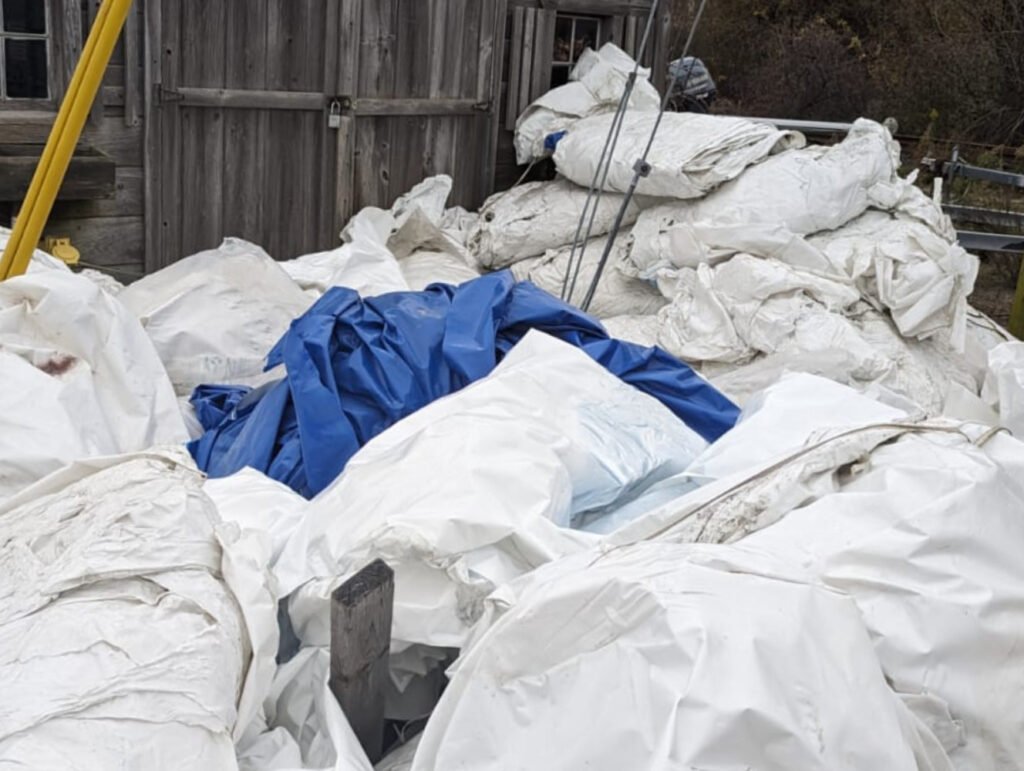
Collecting and sorting plastic waste is expensive and logistically complex. Municipalities and waste management companies must invest in infrastructure, transportation, sorting technologies, and heavily in education. Without subsidies or regulation, economics rarely works.
At the same time, many manufacturers publicly commit to using recycled plastics but hesitate when faced with the real cost and production realities.
Virgin plastic is still much cheaper, more consistent in quality, and easier to process.
The result? A market where demand for recycled plastic exists mainly in marketing presentations.
Chemical Safety Concerns Around Recycled Plastics
While recycling is often presented as a circular solution to plastic waste, scientists increasingly warn that recycled plastics may contain a complex mixture of chemicals originating from previous product uses, additives, and degradation processes. These include plasticizers, stabilizers, flame retardants, pigments, and other additives that provide specific performance characteristics. During a product’s life cycle and recycling process, these substances can accumulate or transform into additional compounds.
This chemical complexity creates challenges for ensuring consistent safety across recycled materials.
Recycling can introduce or concentrate contaminants
Recycling processes often mix plastics from many different products and sources. Because of this, cross-contamination between materials can occur, especially when plastics originally intended for different applications are processed together.
In some cases, the concentration of chemicals of concern can be higher in recycled plastics compared with virgin materials. Reviews of recycling streams have reported elevated levels of substances such as PFAS and other hazardous additives in recycled materials.
A central issue is that recycling extends the life of plastics that may already contain hazardous additives. When these materials are repeatedly processed and mixed with other plastics, legacy chemicals can persist in the recycling system and appear in new products.
Because many plastic additives historically used in manufacturing were not designed with circular recycling in mind, researchers warn that recycling systems can inadvertently redistribute chemicals of concern through new products and material streams.
Addressing chemical safety of recycled plastics will be essential if recycling is to play a major role in a future circular plastics economy.
Sources: Groh et al., Environmental Pollution (2023); Food Packaging Forum research summaries; Lithner et al., University of Gothenburg research (2023); Packaging Dive reporting on recent studies;
Even When Recycled Plastic Exists, There Isn’t Enough — or Enough Demand
Ironically, the recycled plastics market suffers from two opposite problems simultaneously.
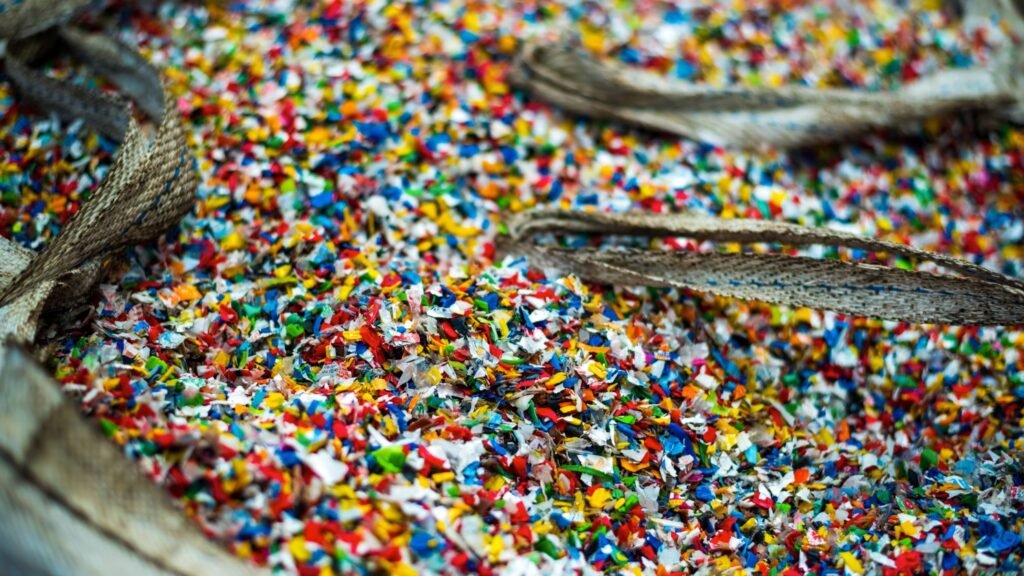
On one side, high-quality recycled material is often in short supply. Industry participants report that suppliers can be sold out of recyclate for months due to limited supply. (interpack.com)
On the other hand, many manufacturers still choose virgin plastics whenever possible because recycled materials can introduce variability or require process adjustments, which requires more efforts and clearly involves higher cost.
Meanwhile, globally, recycled plastics represent only a small share of total plastic production — virgin plastics still dominate by a huge margin. (Wider Sense – Wandel denken)
Consumers Say They Want Recycled Plastic — Until They Have to Use It
Consumers frequently say they support sustainability. But purchasing behavior tells another story.
When recycled plastic products are:
- more expensive
- slightly different in color or texture
- perceived as lower quality
sales often drop.
In other words, the sustainability preference disappears when it reaches the checkout.
The Real Problem Is Not Image — It’s the System
Many activists frame plastics recycling as a public relations problem.
But industry voices increasingly argue something different: plastics have a waste management and system problem, not just an image problem.
Recycling requires:
- efficient collection systems
- advanced sorting infrastructure
- reliable recycling technologies
- strong market demand for recycled materials, and
- big willingness of all stakeholders to make it happen!
Without all five, the circular economy cannot function. And today, those pieces rarely align.
The “Green Promise” That Everyone Repeats
So why do sustainability pledges keep multiplying?
Because every stakeholder benefits from the narrative:
- States municipalities improve ESG perception
- Governments signal environmental action
- Consumers feel responsible
- Companies avoid deeper systemic change
Meanwhile, the fundamental economics remain unchanged: recycling plastic is an expensive and potentially dangerous substance.
The Hard Question the Industry Must Answer
If we want real progress, the conversation must shift from "We want to recycle plastics" to:
- Who is willing to PAY for it?
- Who will build the infrastructure?
- Who will accept the trade-offs?
- Who will take responsibility?
Until those questions are answered honestly, the circular plastics economy will remain more aspiration than reality.
Recycling should remain a long-term objective. But until the infrastructure, economics, and chemical safety of plastic recycling are fully solved — and until “recycling” stops meaning incineration in many cases — it may be pragmatic to support additional technologies that can reduce the persistence of plastic waste today, including landfill-biodegradable materials.
Should bioWRAP® be recycled or thrown away?
bioWRAP®, bioTAPE® and bioDOOR™ are engineered for the environment where most used shrink wrap ultimately ends up — the landfill.
They are formulated to biodegrade in anaerobic (oxygen-free) landfill conditions, where naturally occurring microorganisms convert the material into water, gas and organic matter without leaving persistent microplastics behind. Because of this, they can be safely disposed of with normal solid waste and sent to landfill, where the breakdown process will begin as intended.
If your marina or municipality operates a verified shrink-wrap recycling program, the material can still be collected there. However, in practice a large portion of shrink wrap gathered for recycling is later redirected to landfill due to contamination and handling limitations. The advantage of bioaqualife® materials is that even in this common real-world outcome, the material is designed to biodegrade rather than remain permanently in the environment.
In simple terms: Use normally → remove → dispose with confidence to solid waste dumpster.
How long does bioWRAP® take to biodegrade after disposal?
bioWRAP® typically biodegrades within approximately 3–5 years after reaching an active landfill.
The timeline depends on landfill biology — moisture, microbial activity, and temperature influence how fast microbes consume the material. Just like food waste decomposes faster in some landfills than others, our plastic biodegradation speed varies by site.
For comparison:
- Conventional shrink wrap: persists for centuries and fragments into microplastics
- bioWRAP®: converted by microorganisms into gas, water and organic matter. No microplastics left behind.
Importantly, the film does not weaken during storage or seasonal use. The biodegradation process begins only after disposal in a landfill where the anaerobic microbial environment exists.
Does bioWRAP® really biodegrade in a landfill, or is it just marketing?
Yes — bioWRAP® shrinkwrap is engineered to biodegrade only in landfill conditions, not during use or storage.
Most plastics marketed as “biodegradable” require oxygen, sunlight, or industrial composting. A landfill is the opposite environment: dark, compressed, and oxygen-poor. That is why traditional polyethylene shrink wrap can remain intact for hundreds of years.
bioWRAP® contains a unique proprietary formula that activates microbial digestion in anaerobic (oxygen-free) landfill conditions. Microorganisms consume the plastic as a carbon source and convert it into naturally occurring gases, water and biomass — the same biological process that breaks down organic waste underground. No microplastic left behind!
The material remains stable during storage, installation, sun and winter exposure, and normal outdoor use. Biodegradation begins only after disposal in a biologically active landfill.
This behavior is verified using internationally recognized anaerobic biodegradation testing standards (ASTM D5511).